
Zones of Regulation
The Zones of Regulation is an approach used to support children in identifying and managing emotions. It organises feelings, states of alertness and energy levels into four coloured zones- blue, green, yellow and red. The simple, common language and visual structure of The Zones of Regulation helps make them easier to talk about, think about and regulate. Children learn to regulate their Zones to meet their goals and task demands, as well as support their overall wellbeing.
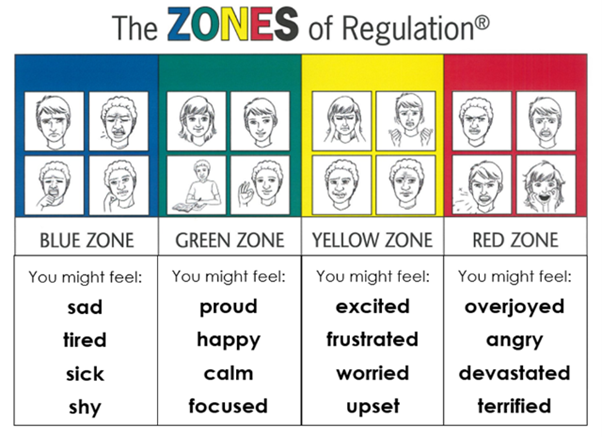
Blue Zone: The Blue Zone portrays down feelings and low energy levels such as when someone feels bored, sad, tired, or unwell.
Green Zone: The Green Zone depicts calmness and the feeling of being in control. A person in the green zone may be described as content, focused or happy.
Yellow Zone: The Yellow Zone describes a person with additional levels of energy and elevated emotions but remains in control. An individual may be facing nervousness, wiggles, silliness, excitement, anxiety, frustration or stress.
Red Zone: The Red Zone demonstrates strong emotions and extraordinarily high energy. A person is said to be in the red zone when they are feeling angry, elated, terrified, out of control, devastated or enraged.
How will my child learn about the Zones of Regulation?
We are developing the use of The Zones of Regulation as a whole school approach. This is to help us develop a common language across the school through which to discuss emotions and behaviours.
We introduce the Zones through discrete teaching lessons and through our PSHE curriculum. We also use the Zones language as part of daily school life so all staff will be referring to them, not just their class teacher. Some children might prefer not to use the ‘Zones language’ but label the emotions directly- this is fine and encouraged. Some individuals and small groups may work more intensively with the materials to support their particular needs. All classrooms have The Zones on display and have access to a range of tools (eg. sensory equipment, calming activities etc) to allow children to take care of The Zones that they are in.
Aims of using the Zones of Regulation
- To help children identify which Zone they are in and how to best look after themselves in that Zone.
- To gain an increased vocabulary of emotional terms so pupils can explain how they are feeling.
- To develop problem-solving skills.
- To identify a range of different calming and alerting strategies/tools that support them, allowing them to self-regulate.
Key points about using The Zones of Regulation
- It is important to know that it’s fine for children to experience all of these Zones.
- Children may be in more than one Zone at a time.
- There is no bad Zone, but it is important to learn and use strategies that help children take care of the Zones that they are in.
- Some emotions may fall into more than one Zone
The future of The Zones of Regulation at Willington Primary School
As the children become more familiar and confident using The Zones of Regulation, we will start exploring the following:
- triggers (something that causes someone to become less regulated)
- expected and unexpected behaviours
- thinking strategies
- how emotions, sensory experiences, physiological needs (e.g. hunger/lack of sleep) and environments can influence which Zone we are in.
If parents/carers would like more information about Zones of Regulation, please read this guide:
Parents Guide – Zones and Regulations
Please see the links below for any further information:
www.weareteachers.com/zones-of-regulation-activities
https://www.theottoolbox.com/?s=zones+of+regulation
The Zones of Regulation – An Overview of The Zones for Parents (hes-extraordinary.com)
